
Skip to content

Dutch Report Warns of CCP Interference in Strategic Industries

A report released on July 3 by the Hague Centre for Strategic Studies (HCSS) and the China Knowledge Network (CKN) warns that the Chinese Communist Party (CCP) is employing a broad range of foreign interference tactics to expand its influence over the Netherlands’ strategic industries, particularly the semiconductor, maritime, and aerospace sectors. The report identifies cyber espionage, talent recruitment, economic coercion, information operations, legal pressure, and supply chain leverage as key tools used by Beijing.

The report identifies Dutch semiconductor giant ASML as a primary target because of its global monopoly on commercial extreme ultraviolet (EUV) lithography machines, which are essential for producing advanced semiconductors used in cutting-edge electronics and military systems. According to the report, the CCP has sought to acquire ASML’s technology through talent recruitment, academic collaboration, and reverse engineering, while also using rare earth export controls to exert pressure on the company’s supply chain. Other semiconductor firms, including NXP, are also identified as targets.

In the maritime sector, the report warns that Chinese state-owned enterprises, including COSCO Shipping Ports and China Merchants Port Holdings, have established significant operational roles at the Port of Rotterdam. It cautions that, in a crisis, Beijing could exploit these positions through cyber espionage, data access, or targeted disruption, potentially affecting European energy supplies, industrial production, and NATO logistics. The report concludes that China’s growing influence over Dutch strategic industries could constrain the Netherlands’ policy options, delay military preparedness, and complicate coordination with allies in the event of a Taiwan Strait conflict.

Source: Epoch Times, July 16, 2026
https://www.epochtimes.com/gb/26/7/15/n14810251.htm
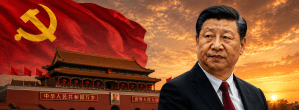
Xi Jinping Calls for New Global AI Order to Challenge U.S. Leadership

At the 2026 World Artificial Intelligence Conference (WAIC) in Shanghai, Xi Jinping called for a new global AI governance framework, positioning China as an alternative to the U.S.-led AI order. He described China’s open-source AI models as a global public good and argued that AI development and governance should be driven by international cooperation rather than dominated by any single country.

Xi criticized the “overextension of the national security concept” in AI governance, an apparent reference to U.S. technology restrictions on China. He announced that China will provide 5,000 AI training opportunities for developing countries over the next five years, expand AI cooperation with BRICS, ASEAN, Latin America, and Africa, and make its AI-powered weather forecasting and early warning system available to 30 countries.

Xi also highlighted the launch of the Chinese-initiated World AI Cooperation Organization (WAICO), which reportedly has 29 member states. The initiative reflects Beijing’s broader effort to shape global AI governance, promote Chinese AI standards, and strengthen technological partnerships with the Global South as strategic competition with the United States intensifies.

Source: Deutscher Welle, July 17, 2026
https://www.dw.com/zh/习近平倡议中国建立全球ai新秩序-挑战美国主导地位/a-78007555

Report: North Korea Seeks Chinese Investment While Tightening Controls on Chinese Influence

Daily NK, a South Korean news outlet specializing in North Korean affairs, reported that Pyongyang has adopted a dual-track policy toward China, expanding economic cooperation while tightening ideological controls to prevent the spread of Chinese cultural influence. Citing a source in Kangwon Province, the report says the directive was issued by the Workers’ Party of Korea Central Committee in late June following Xi Jinping’s visit to North Korea.

The directive reportedly instructs officials to separate political and security issues from economic cooperation, encourage Chinese investment, facilitate customs clearance for bilateral trade, and boost foreign currency earnings during the second half of the year. Cadres were told to adopt a pragmatic approach that reassures Chinese investors while avoiding political disputes that could undermine economic cooperation.

At the same time, Pyongyang reportedly ordered security agencies to intensify efforts to block Chinese cultural and ideological influence. The directive emphasized that while North Korea can “make money and buy on credit, it must not be influenced ideologically.” Authorities were instructed to crack down on rumors that Xi’s visit had led to greater tolerance for watching unauthorized Chinese films and television programs.

The policy reflects North Korea’s effort to maximize economic benefits while balancing its relationships with China, Russia, and the United States. As Beijing seeks to preserve its influence on the Korean Peninsula amid expanding North Korea-Russia cooperation, Pyongyang is reportedly attempting to leverage competition among the major powers for economic gain while preventing China’s reform experience and capitalist culture from weakening domestic ideological control.

Source: Daily NK, July 14, 2026
https://www.dailynk.com/chinese/可以赚钱和赊账,但思想不能受影响,拿出对/

Papua New Guinea to Close Taiwan Representative Office; U.S. Expressed “Deep Concern”

Papua New Guinea (PNG) Foreign Minister Justin Tkatchenko confirmed on July 16 that the government will close Taiwan’s representative office in Port Moresby, a move welcomed by Beijing and strongly protested by Taipei.

PNG maintained formal diplomatic relations with the Republic of China (Taiwan) for only 17 days in 1999 before reestablishing diplomatic ties with the People’s Republic of China (PRC). Although the two sides have not maintained official diplomatic relations since then, they continued to operate representative offices that functioned as de facto embassies. PNG closed its trade office in Taipei in 2023, citing economic reasons, while Taiwan’s representative office in Port Moresby remained open until the latest decision.

The U.S. State Department said it was “deeply concerned” by the move, describing it as “yet another example of Beijing’s intimidation campaign against Taiwan and its supporters around the world.”

Strategically located along key sea lanes and near international submarine cable routes connecting the United States and Australia, Papua New Guinea has become an important arena for geopolitical competition. Over the past decade, the PRC has invested billions of dollars in Pacific island nations, expanding its diplomatic and economic influence across the region.

Source: Deutsche Well, July 18, 2026
https://www.dw.com/zh/巴新关闭台北办事处-美国北京恫吓的又一例证/a-78018695

China’s Economy Is Cooling Overall, Not Just Diverging, Economist Warns

Chinese economist Li Daokui said China’s biggest macroeconomic problem is not a “K-shaped” divergence between strong and weak sectors, but an overall cooling that has persisted for three years. Speaking at the 122nd China Macroeconomy Forum on July 11, the Tsinghua University institute director warned that focusing only on divergence gives false comfort, since the “upper line” of a K-shape cannot lift the whole economy.

Li highlighted two concerning indicators. First, his team recalculated a broader unemployment rate by including discouraged workers who had stopped being counted as part of the labor force, arriving at a rate of 10.2%. He estimated about 24 million people have been long-term discouraged jobseekers, including 13 million aged 16 to 24, posing risks to social stability.

Second, fixed-asset investment turned negative in 2025 and fell a further 4.1% year-on-year in the first five months of 2026, an unusually severe and prolonged decline.

Li attributed the slowdown to the disappearance of old growth engines—large-scale infrastructure and real estate investment—without new ones emerging. While households have absorbed much of the property downturn’s impact, he said the bigger problem lies with local governments and their debt. Households are reluctant to borrow for consumption, businesses are reluctant to invest, and funds flowing to local governments are largely being used to roll over old debt rather than fund new activity.

Li proposed that the central government significantly increase bond issuance beyond this year’s planned roughly 12 trillion yuan (approximately US$1.68 trillion), directing new funds toward stabilizing real estate, human capital investment, livelihood spending, and regional consumption subsidies to help local governments drive economic transformation.

Source: Central News Agency (Taiwan), July 14, 2026
https://www.cna.com.tw/news/acn/202607140130.aspx

Ex-Hungarian Foreign Minister Joins BYD Amid Conflict-of-Interest Backlash

Péter Szijjártó, Hungary’s pro-China, pro-Russia former foreign minister, announced on July 15 that he is resigning his parliamentary seat to take a senior executive role at Chinese EV giant BYD, sparking accusations of a conflict of interest given his past efforts to secure Hungarian government subsidies for the company.

Szijjártó served as foreign minister under former Prime Minister Viktor Orbán for nearly 12 years before stepping down in April, after Orbán’s government lost power to the pro-European Tisza party. He had kept his parliamentary seat but rarely attended sessions or appeared publicly since the election.

New Prime Minister Péter Magyar accused Szijjártó on social media of long representing “foreign interests,” saying he had lobbied heavily to secure massive state subsidies for BYD. Szijjártó, for his part, said on Facebook he had received a “highly prestigious invitation” to join BYD, calling it one of the most successful global automakers of the past two decades, and said he would become the company’s executive in charge of external relations and new business development.

As foreign minister, Szijjártó had championed Chinese investment in Hungary, announcing in 2023 that BYD would build its first European plant there—calling it one of the largest investments in Hungarian economic history—backed by state financial support. In 2025 he announced BYD would locate its European headquarters and R&D center in Budapest, with the Hungarian government pledging 20 billion forints (about US$63.8 million) in subsidies. The Budapest plant allows BYD to manufacture inside the EU, sidestepping the bloc’s tariffs on Chinese EVs; the exact subsidy total has never been disclosed.

Szijjártó was also known for close Russian ties, receiving Vladimir Putin’s Order of Friendship in 2021 and continuing energy talks with Moscow after its 2022 invasion of Ukraine. The Washington Post reported he frequently briefed Russian Foreign Minister Sergei Lavrov during EU meetings.

Source: Central News Agency (Taiwan), July 16, 2026
https://www.cna.com.tw/news/acn/202607160061.aspx

China Successfully Recovers Orbital-Class Rocket Booster for the First Time

China announced on July 10 that it had successfully recovered an orbital-class rocket booster for the first time, marking a major milestone in its effort to develop reusable launch vehicle technology. According to state media, the booster from a Long March-10B launch vehicle separated from the upper stage about six minutes after liftoff, executed a controlled vertical descent, and was successfully captured by a recovery net mounted on an offshore platform. Chinese officials described the test as a major technological breakthrough.

Beijing has identified reusable rocket technology as a national priority and has relaxed financing rules to support the country’s commercial space sector. The technology is considered essential for reducing launch costs and enabling the rapid deployment of China’s planned satellite constellations, which are widely viewed as potential competitors to SpaceX’s Starlink network. The Long March-10B is also part of China’s crewed lunar program, which aims to land astronauts on the Moon by 2030.

Despite this milestone, China still trails the United States by a considerable margin in reusable launch capabilities. SpaceX has completed hundreds of successful booster recoveries and routinely reuses boosters at a rapid operational pace, while China has achieved only its first successful recovery and plans just a limited number of reuse demonstrations this year. How quickly China closes this technological gap is likely to influence the next phase of U.S.-China competition in space, as Beijing seeks to challenge U.S. leadership in the sector.

Source: VOA, July 11, 2026
https://www.voachinese.com/a/china-claims-milestone-in-reusable-rockets-but-wide-gap-with-spacex-remains-20260701-/8170387.html